agentage.wiki / Articles / Analysis
When Verification Steps in Agent Pipelines Pay Off
Tokens spent on verification act as low-cost insurance, but only measured gains justify the expense in production systems.
Where Agent Errors Slip Through
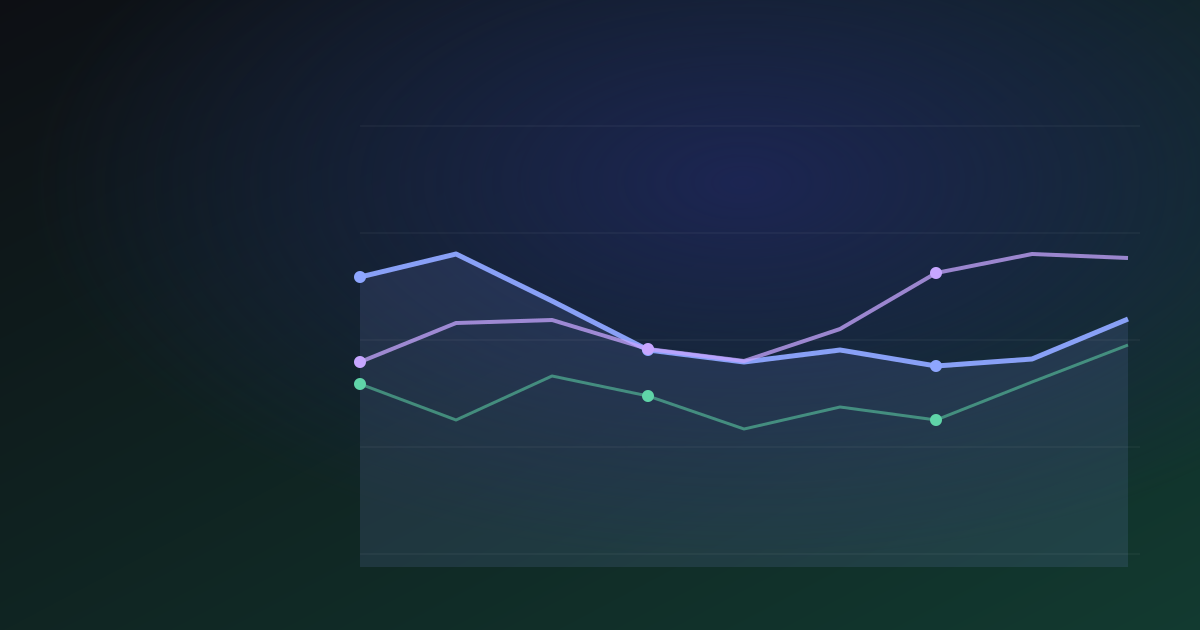
Errors in agent systems often stem from uncoordinated communication rather than model weakness. Independent agents without a central validator amplify mistakes by a factor of 17.2 compared to coordinated systems. This amplification occurs because each agent repeats work or contradicts previous findings without a mechanism to resolve conflicts.
Production failures frequently arise from runaway loops, excessive retries, and context overflow. These issues are structural design flaws, not limitations of the underlying language model. Without explicit iteration limits and cost ceilings, agents consume resources until they fail or produce degraded output.
The most dangerous errors are those that pass through initial checks but violate policy or factual accuracy later. A self-correction loop that critiques output against defined goals can catch these omissions. However, relying solely on the agent to critique itself is insufficient without an external validation layer.
You must treat the token budget as a primary resource, similar to memory or CPU cycles. Spending tokens on redundant coordination wastes up to 86% of the budget in some frameworks. Efficient systems allocate tokens to distinct phases of retrieval, synthesis, and verification rather than letting agents drift.
- Uncoordinated agents amplify errors significantly more than orchestrated ones.
- Runaway loops and context overflow cause most production failures.
- Redundant coordination can waste the majority of the token budget.
- Self-correction requires external policy constraints to be effective.
Chain-of-Verification Inside a Pipeline
A chain-of-verification step acts as a dedicated node that checks critical claims before final output generation. This process involves generating a preliminary response, identifying potential factual errors, and querying for evidence to confirm or refute those points. The method reduces hallucination rates in specific benchmarks like biography generation.
The verification step does not replace the generation phase but operates as a parallel or subsequent filter. It forces the system to retrieve evidence for specific assertions rather than relying on internal probability distributions. This shift moves the burden of truth from the model's memory to external data sources.
Implementing this pattern requires a clear separation between the generator and the verifier roles. The generator produces the draft, while the verifier acts as a judge using a calibrated rubric. This division prevents the model from simply rationalizing its own initial errors during the critique phase.
You should deploy this mechanism for high-stakes tasks where factual accuracy outweighs speed. Routine tasks may not justify the extra computational cost. The goal is to ensure that the final output meets strict quality standards before it reaches the user or downstream systems.
- Verification separates generation from fact-checking to reduce hallucinations.
- The verifier uses external evidence rather than internal model knowledge.
- Clear role separation prevents self-rationalization of errors.
- Apply this pattern selectively to high-value, high-risk outputs.
Placing the Verifier: Per Step or at the End
Placing a verifier after every single step creates unnecessary overhead and slows down the entire pipeline. For sequential tasks like coding or long-form writing, constant interruption breaks the logical flow and increases token costs. The communication overhead can degrade performance by up to 70% in these scenarios.
The optimal placement is after independent data gathering phases or immediately before irreversible actions. In parallel research tasks, verify the consolidated findings once all sub-agents have submitted their artifacts. This approach balances the need for accuracy with the efficiency of parallel processing.
For tasks involving financial decisions or policy compliance, insert a verification gate before the final execution command. This ensures that the agent has adhered to all constraints and that the proposed action is valid. It acts as a safety valve to prevent costly mistakes caused by misinterpretation.
Avoid placing verifiers in the middle of complex reasoning chains where the context is still evolving. Wait until the reasoning is complete and the output is stable. This strategy minimizes the risk of the verifier rejecting valid but incomplete intermediate states.
- Per-step verification disrupts sequential logic and inflates costs.
- Verify after parallel data collection or before final execution.
- Use verification gates for high-stakes decisions and policy compliance.
- Wait for stable output states before initiating the check.
Proving the Gain with A/B Runs
Assuming verification adds value without measurement leads to wasted resources. You must run parallel experiments with and without the verifier to quantify the actual improvement. Use a fixed set of ground-truth queries to ensure a fair comparison across both conditions.
Measure specific metrics such as factual accuracy scores, task completion rates, and token efficiency. A study on biography generation showed a relative improvement in factual scores, though the number of stated facts decreased. This trade-off highlights the need to define what 'success' means for your specific use case.
Run at least 10 to 15 test cases to establish statistical significance. Small sample sizes may hide the true impact of the verification step. Ensure that the rubric used for judging the output remains consistent between the two runs to avoid bias.
Document the results clearly to decide whether the verification step justifies its cost. If the gain is marginal, consider simplifying the pipeline. If the gain is significant, scale the verification step to other parts of the workflow.
- Run parallel A/B tests with a fixed set of ground-truth queries.
- Measure factual accuracy, completion rates, and token efficiency.
- Use at least 10 to 15 test cases for reliable results.
- Maintain a consistent rubric to ensure unbiased comparison.
Spend on Verify, Never on Replanning Loops
Investing tokens in verification yields higher returns than endless replanning loops. Repeated attempts to fix the same error without a structured critique often lead to diminishing returns. The system may get stuck in a cycle of generating and correcting without reaching a solution.
Set explicit iteration limits and termination conditions for any loop. If the agent fails to converge after a set number of attempts, trigger a fallback or escalate to a human. This prevents the system from burning through the budget on futile efforts.
Prioritize spending tokens on high-quality tool usage and external verification over internal deliberation. A tool-testing agent that refines tool descriptions can improve efficiency by 40%. This external optimization is more effective than internal rethinking.
Treat verification as a strategic investment rather than a reactive fix. By catching errors early with a dedicated verifier, you avoid the compounding costs of downstream corrections. This approach aligns token spending with the actual value of the output.
- Verification offers better ROI than unstructured replanning loops.
- Set strict iteration limits to prevent budget exhaustion.
- Optimize tool usage and external data access over internal thinking.
- Use verification as a proactive strategy to avoid downstream costs.
Key takeaways
- Verification steps reduce factual errors but must be placed strategically to avoid disrupting sequential workflows.
- Parallel A/B testing with ground-truth data is the only way to prove the value of a verification step.
- Spending tokens on verification is more efficient than allowing agents to enter infinite replanning loops.
- Uncoordinated multi-agent systems amplify errors, making an orchestrator or verifier essential for stability.
- Token budgets should be allocated based on task value, with high-stakes tasks receiving dedicated verification layers.
Related questions
Does adding a verifier always improve agent performance?
No. Adding a verifier improves performance only when the task involves high factual stakes and the verifier is properly calibrated. In sequential tasks, constant verification can degrade performance by introducing communication overhead. You must measure the gain with A/B runs before deploying it broadly.
How many test cases do I need to validate a verification step?
You should run at least 10 to 15 parallel test cases using a fixed set of ground-truth queries. This sample size helps establish statistical significance and reveals whether the improvement is real or due to random variance. Ensure your evaluation rubric remains consistent across all runs.
What happens if I skip the verification step in a multi-agent system?
Without a verification step, independent agents can amplify errors by a factor of 17.2 compared to coordinated systems. Unchecked agents may duplicate work, contradict each other, or produce hallucinated outputs. An orchestrator or dedicated verifier is necessary to prevent these systemic failures.
AI-assisted: drafted with a language model from the author's research notes, then edited and checked before publication. Author: Zoltán Varga, AI visibility researcher and AI ecosystem architect, Budapest.